I took the tram to the Copenhagen International School as hoards of urbanites commuted to work. Countless people on bicycles whizzed past me as I walked to the tram stop in the early morning light. Copenhagen International School (CIS) is located in Nordhaven, a harbor area on Copenhagen’s coast.
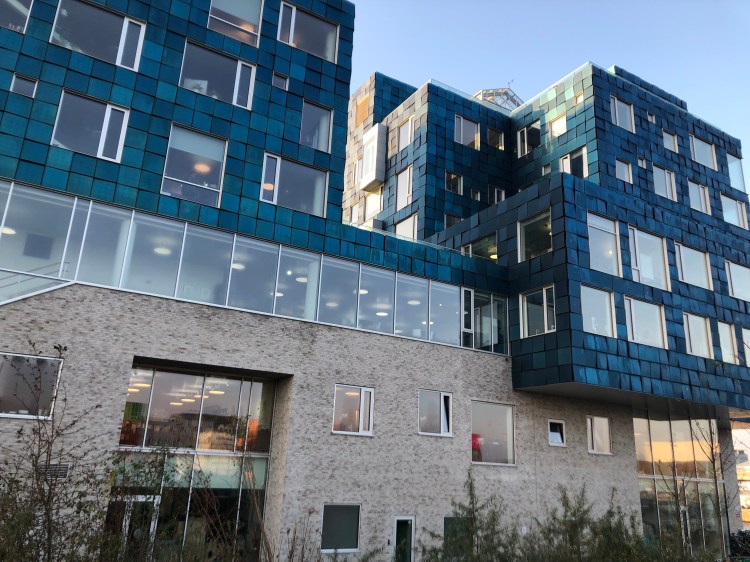
The building of CIS is a big deal from both architecture and sustainability standpoints. The building can house 1,200 people, making it the largest primary school in Copenhagen. It is also one of the largest building-integrated solar power plants in Denmark. Twelve-thousand solar panels make up the building’s exterior. These solar panels produce half the energy that this massive school consumes.
The walk to CIS from the tram stop was a bit surreal- I left a buzzing urban center to arrive in a part of the city that was quiet, empty, and very, very industrial. There was a lot of striking architecture- but as I approached a distant CIS, the building towered over the construction zones and distant harbor.
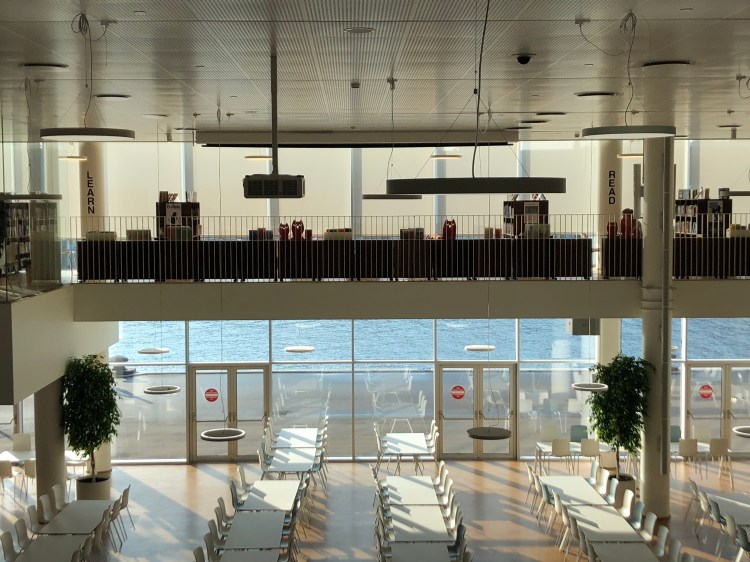
The street leading up to the school reminded me of a moat. Once I entered the front doors, it seemed like a busy, happy place- just a very well-designed one. Huge windows framed a common area and library, revealing a harbor lit up by golden sun rays.
Jessica co-teaches her kindergarten class with Andy, who wasn’t there- so there was a substitute to fill in for him. Jessica was elegant and gregarious. She gave me some fast facts about CIS: It’s inclusive, so students with special needs are included in the general education classroom. Some go to the school counselor as needed. The curriculum is concept-based. It’s called PYP, short for Primary Years Program: this is an International Baccalaureate model. Many of the learning activities tie into a theme that is explored across the curriculum within different subjects- at the time, the concept was: “people around the world celebrate different things for different reasons.”
Jessica asked me if I’d like to run a center. Centers are different learning activities available to the students. The children can work through the activities with or without adult supervision, depending on the intentions of the teacher and the adult to center ratio. Jessica explained that she and Andy have a responsive classroom, a concept that I was familiar with from UCSB: this style of management incorporates routines where the kids take turns speaking on personal and/or academic topics, converse with one another, and often do a bonding activity. The aim is to develop social skills and emotional connections within the classroom.

The different centers included:
- -Bread baking with Jessica: Students tested two roll recipes: one with yeast and one without yeast. Rolls were baked and the results analyzed.
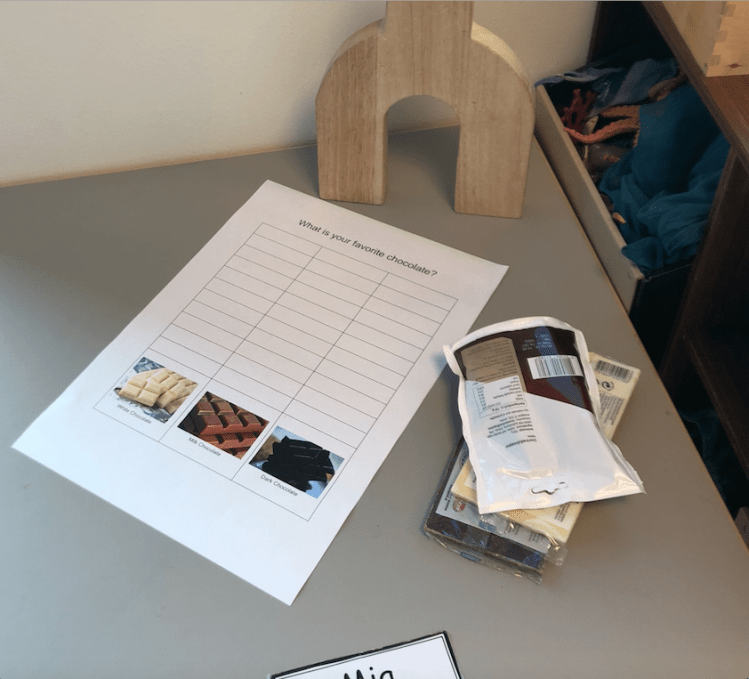
- -Chocolate tasting and bar graphing: I facilitated this activity by calling kids one-by-one to taste dark, milk, and white chocolates and record their favorites on a bar graph
- Self-guided play using blocks
- Labeling pictures with cut-out vocabulary words (managed by the substitute)
- Visual cues for “Bon fire night” aka Guy Fawkes Day, coupled with a chart divided into “How” and “Why”. A parent from the UK had come into class to explain the holiday to the kids.
The children had laminated name tags that they carried with them to their center of choice.
As you can imagine, my job as chocolate-handler made me pretty popular with the kids.
For more information on how the architecture informs the education, as well as brilliant photographs of CIS:
https://www.cfmoller.com/p/Copenhagen-International-School-Nordhavn-i2956.html
 The living learning experience
Loved reading this post! This looks like a wonderful school to work at. Good Luck with your experience. Keep us updated.
LikeLike